
Freedom Trail (Boston)

Last month I visited a friend in Massachusetts. It was unusual for us, as we were both without kids, and we made hay with our limited time. All day Saturday was spent exploring Boston itself, culminating with a trip to Fenway Park. But prior to that we did a lot of walking and checking out sites of the home of the American Revolution. It was glorious.
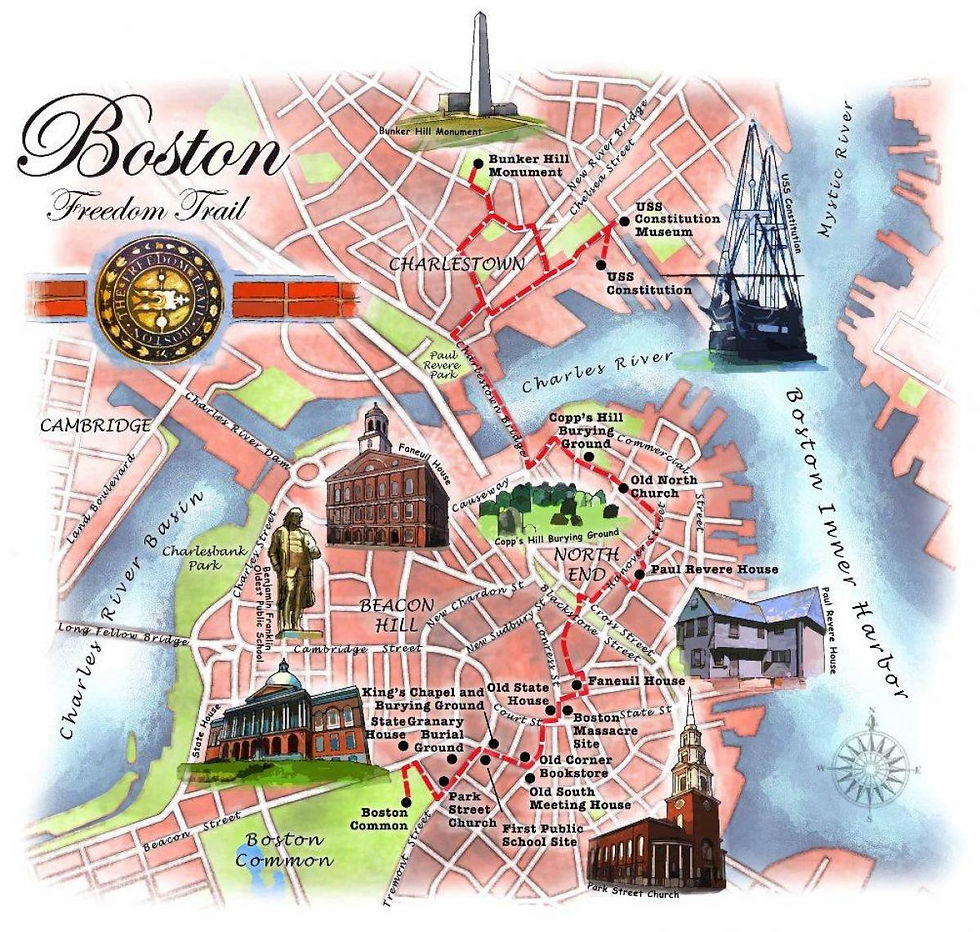
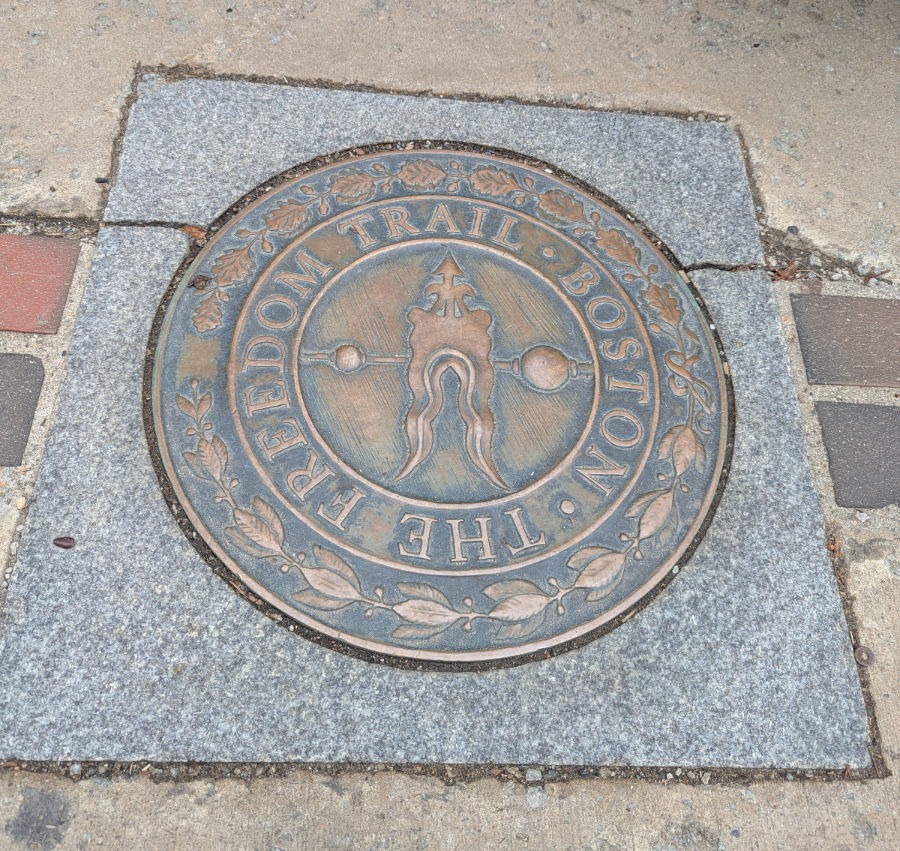
To show its history and impact on the revolution, Boston has an actual red brick trail weaving through the city called the Freedom Trail. This was a real highlight of my time out there. It starts in the big city park, Boston Common, and ends in Charlestown, on the other side of the river, either at Breed's Hill or the USS Constitution, depending on how you want to go. We took an Uber from my buddy's house more in the burbs and it dropped us at the Constitution. (There was no way we were going to move a car around and there's a train from near Fenway back to his house.) So we did the trail backward, not that it really matters, though tbh I think this was preferable.
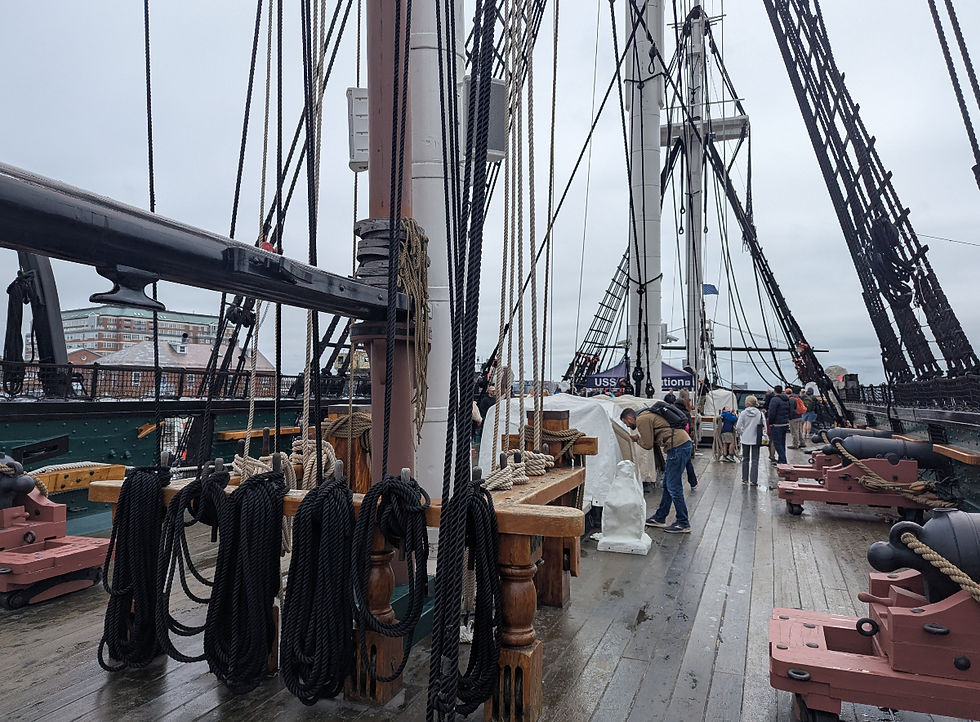
The USS Constitution is an old old wooden ship. No, wait, that's Diversity. The Constitution is old, how did they say it, the oldest commissioned ship afloat in the world. That means it was once an active duty vessel in the US Navy, it's still floating in the water, and there's no other ship in the world that fits these criteria for longer. Its history goes back to the presidency of George Washington, with authorization in 1794 . When just getting the navy started, and attempting to compete with Great Britain, they built a small number of abnormally large frigates and used finicky but extremely durable wood. Due to its tough construction the Constitution eventually earned the nickname 'Old Ironsides.' After serving with distinction in the War of 1812 it stayed in active service until 1881. Later campaigns and plenty of money were required over the years to keep it restored but it's survived and is a pretty cool relic to explore. It's free to go on and they do a bunch of tours through the day, we didn't sign up for anything and only had to wait a few minutes, and got to go down below deck and learn from a real life active duty sailor. That's got to be a choice position. I liked hearing about how the ship worked, seeing how little headroom those sailors had, actually climbing up and down between decks, and learning that a 'buttload' is actually a technical term (see video below).

From there we walked to the Bunker Hill Monument, up on Breed's Hill. This felt like a nice, very old neighborhood to me, and everyone was cleaning up outside, putting out flowers and getting ready for Marathon Monday. On top of the hill is a big obelisk, just like the Washington Monument, commemorating the famous battle there ('Don't fire until you see the whites of their eyes!'), that, if you don't remember, was fought prior to independence on June 17, 1775. The obelisk was constructed 1825-1843, is 221 feet tall, and has 294 steps to the top (compare to Washington: later in 1848-1884, 555 feet tall, 897 steps). I had fun trying to imagine myself fortified there with the British regulars advancing. It's a cool place.

From Charlestown it's a hike along the red brick trail into central Boston, where the rest of the trail sites lie. But it was more than worth it. (This is the big reason I liked doing this in reverse btw, we had the long walks at the start, not the end.) You walk across a bridge over the Charles River, into North End, and go by Copp's Hill Burying Ground (2nd oldest cemetery in the city, from 1659), before running straight into the Old North Church (oldest church in the city, from 1723). This is where Paul Revere organized to signal the route the British were taking, forever memorialized in Longfellow's poem: ('One, if by land, and two, if by sea'). The church is a pay museum so we just had the briefest of looks inside and went on our way. There was more walking to do. Before getting downtown we also walked by Paul Revere's house but I don't have a lot to say about it. I will say there are a ton of places to get Italian food in North End, including cannolis.
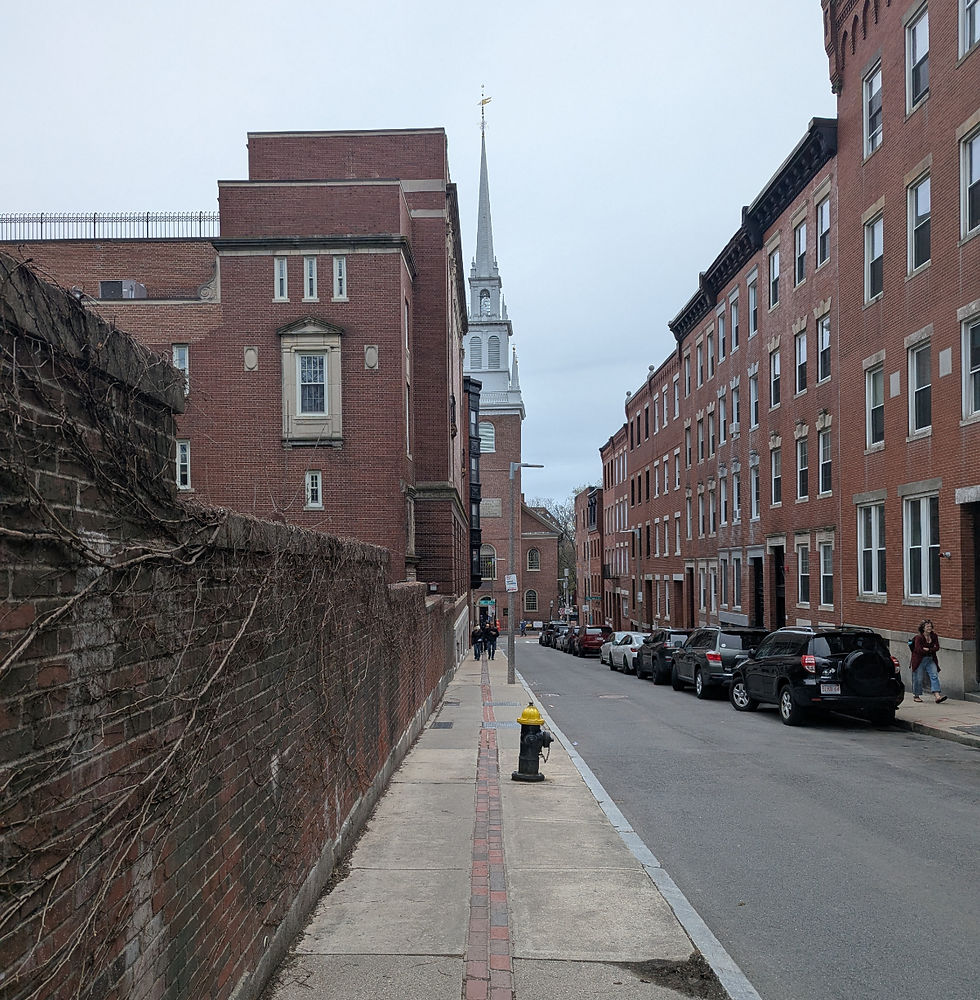
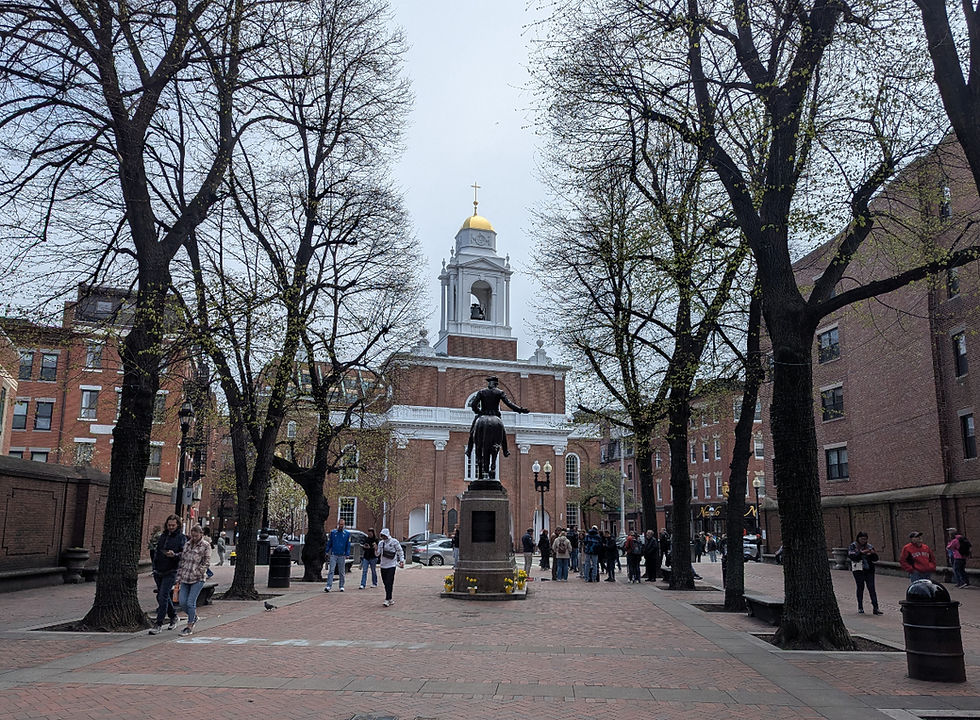
Next up we had lunch at Union Oyster House. I knew it was the oldest (continually operating) restaurant in Boston, from 1826, but didn't know its the oldest in the entire country as well. The building dates to 1704 and it feels old, in the good way. The inside is all about Boston and we sat in a room that was specifically about the Freedom Trail, with intricate signs for each of the most important landmarks. We both had some fish and a few oysters of course. I'd recommend it, especially if you're doing this walk. The bricks go right outside the door too.
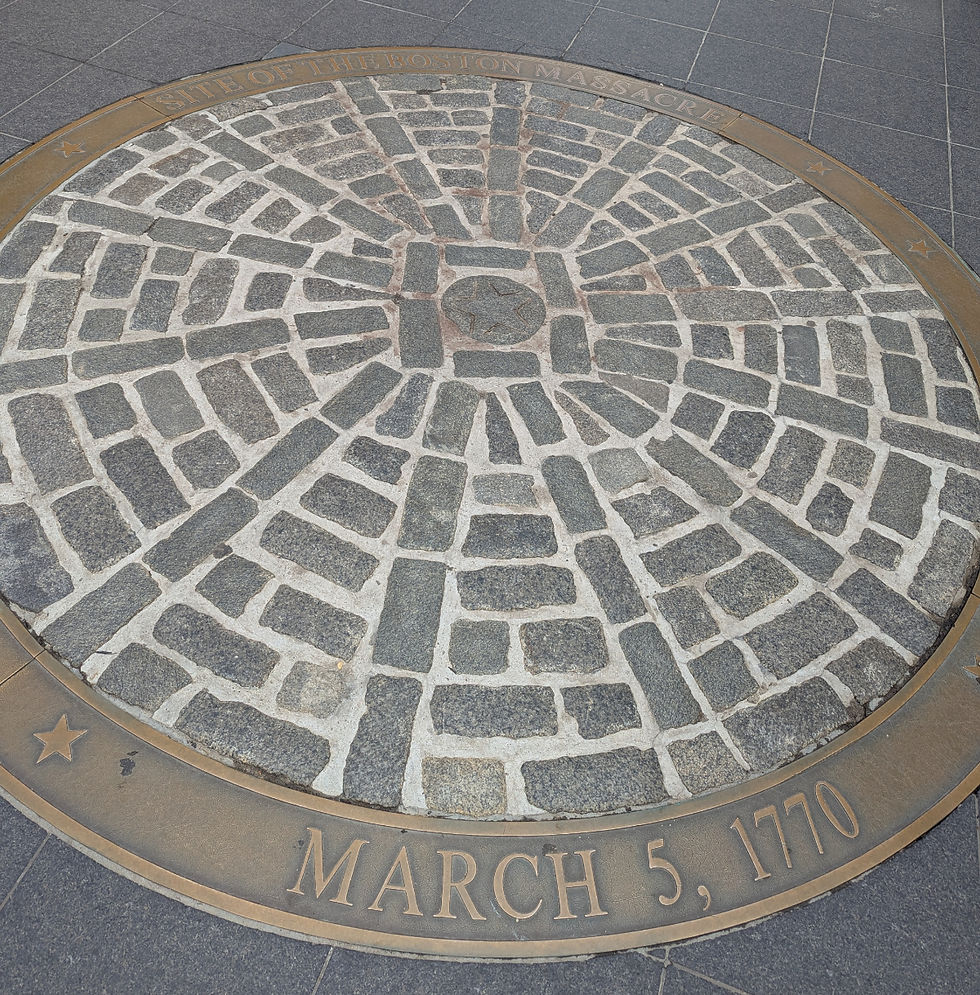
From there it's all pretty packed together on the walk to Boston Common and the State House. There are several more meeting sites where patriots gathered and planned rebellion. Faneuil Hall is now a marketplace, filled with a bunch of interesting little shops as well as history info. There's the site of the Boston Massacre in 1770, right in front of the Old State House. There are a couple more cemeteries, King's Chapel Burying Ground (oldest in the city, from 1630) and Granary Burial Ground (from 1660), holding the bodies of Boston luminaries Paul Revere, Samuel Adams and John Hancock. There's a big central stone monument with the name Franklin on it, as well, for the family of Ben Franklin, but doesn't hold the man himself. From there it's a short walk to the Common.
Boston Common is a massive, centrally located city park. There's a bunch of monuments there and other art (like the new, awfully ugly Embrace sculpture). There's a carousel, a reflecting pond/ice skating rink and more. Across the street in one corner is the current State House, where the Freedom Trail originates (or terminated for us). I do really like the Robert Gould Shaw Memorial there, the main character from Glory (1989). And, because it was Marathon weekend, there were an insane number of porta-potties.
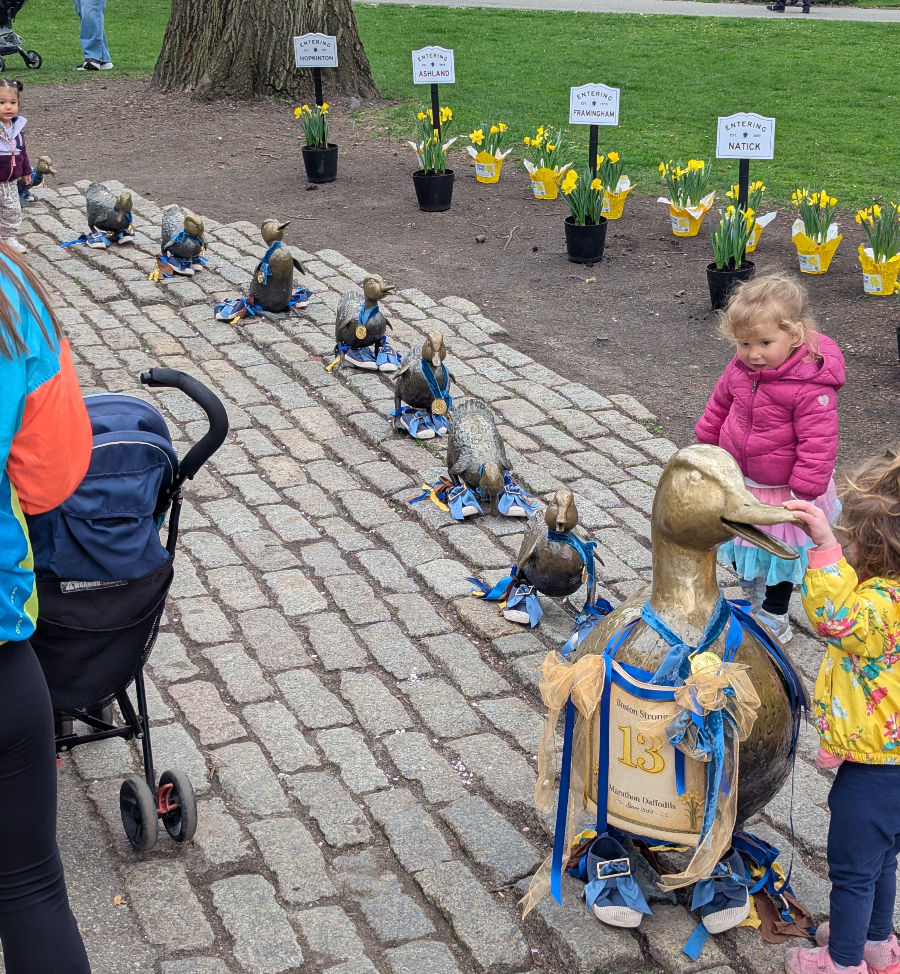
While the Trail was over for us, I also wanted to check out the neighboring Public Garden. This really is an extension of the Common but has a fence around it and is closed at night. It's also nicer and better kept. This was a destination for me because it's featured prominently in two books we know well, specifically the pond and its Swan Boats. It's where the ducks settle and march to in McCloskey's Make Way for Ducklings (where they are remembered in bronze) and where Louis works for a time in White's Trumpet of the Swan, mentioned in this post. It was fun to see in person, for the first since reading those books.
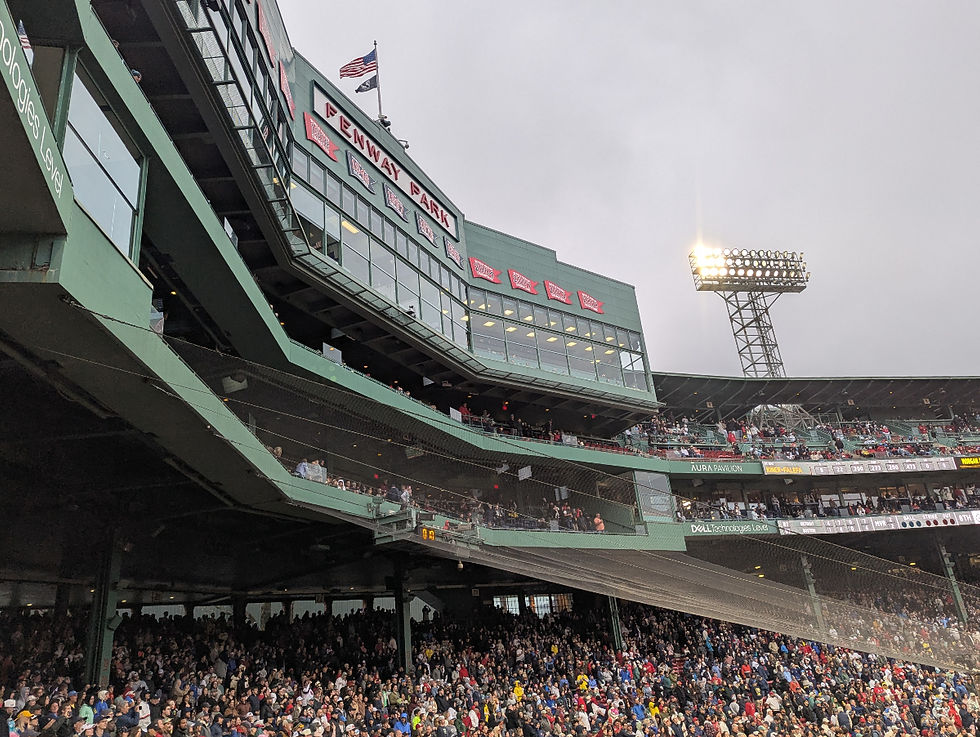
From there we kept walking, past the exceedingly busy marathon finish line and all the way to also historic Fenway Park, where we watched the Red Sox take on the Tigers. My sleep ring, which also tracks some fitness stuff, said I took 22000 steps that day, which is probably less than I would've guessed.
Overall my thoughts on the Freedom Trail are that's very long but doable if you're in half decent shape. It would be a challenge with littles. We certainly could've spent more time on the way but I'm more than happy with what we saw and learned. I'll remember it well, it was an excellent day.


Comments